Case study 04 · CareSkore · Healthcare
CareSkore – Patient Care Assistant
Designing chronic care management for people who work standing up, in noisy hallways, with one monitor and no mouse.
01 · The problem
Chronic care management is a paperwork problem
In 2016 there were 36 million Medicare patients in the United States with two or more chronic conditions. Medicare will pay a clinic to manage those patients between visits, but only if the clinic can prove it did the work.
200
Patients enrolled
Two hundred enrolled patients was roughly $100,000 of annual revenue for a clinic.
Which makes enrollment and time tracking the whole business case. A nurse who forgets to log twenty minutes has not just lost a record. She has lost the billing.
02 · The solution
Take the administration off the clinician
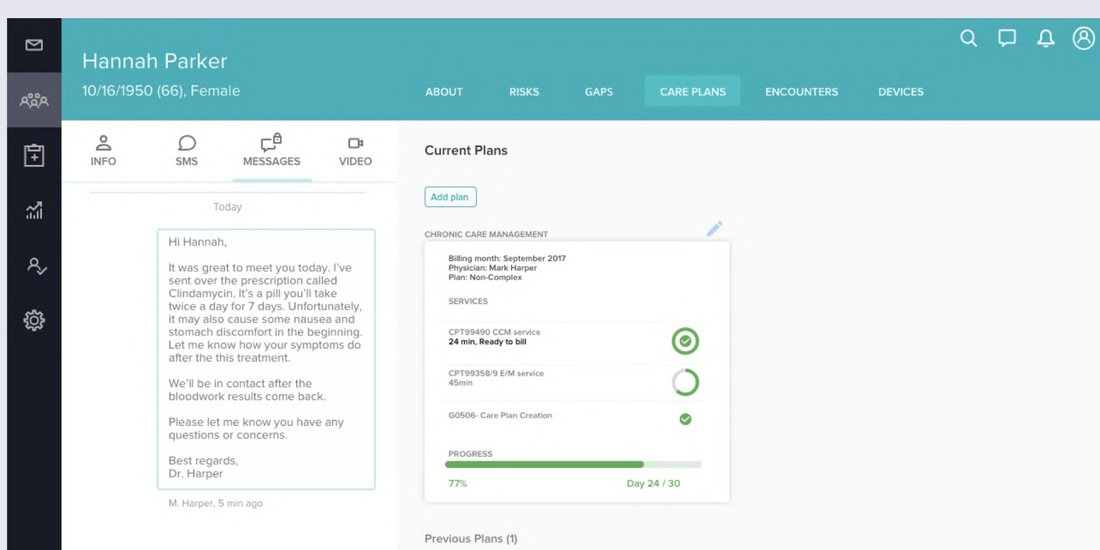
The product did four things, and all four exist so that a nurse can spend the visit on the patient rather than on the paperwork that proves the visit happened.
-
Auto-enrollment
Patients enrolled into the program without a manual process for each one.
-
Auto-identification
The system finds the patients who qualify for chronic care management rather than waiting to be told.
-
Care plan templates
Evidence based templates, so a plan starts from something clinically sound instead of a blank page.
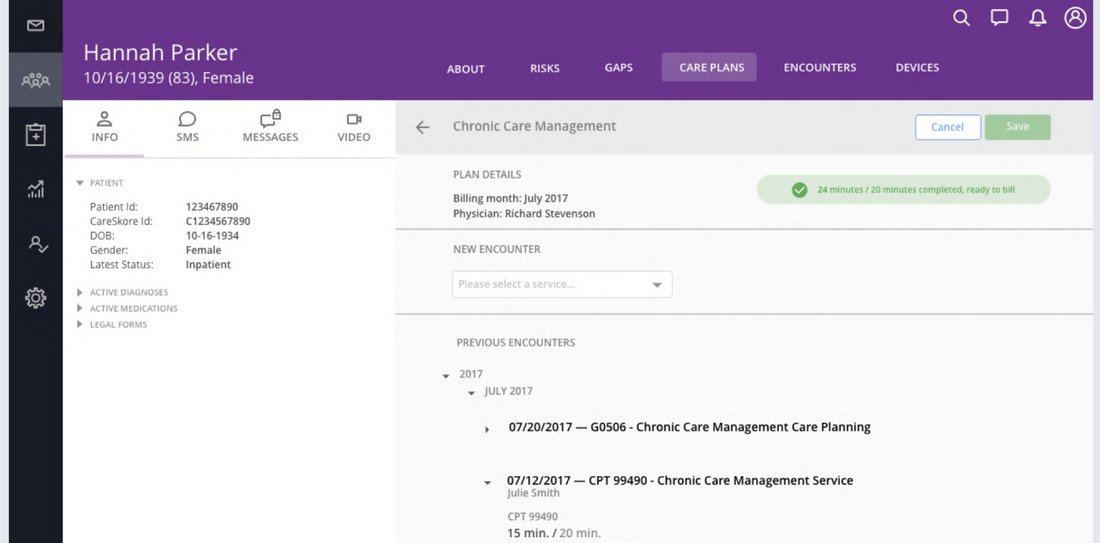
The fourth is the one that pays for the other three: time and activity tracked automatically against the billing codes, so the record that Medicare wants is a byproduct of doing the work rather than a second job at the end of the day.
03 · Field research
Three things I only learned by going there
I ran the research in clinics with nurses and social workers. Each of these changed the design, and none of them would have come out of a conference room.
View patient information
During testing, nurses and social workers were frustrated at not being able to see patient information on one screen. They were doing the reconciliation in their heads, between tabs.
Environmental factors
Observing in a clinical setting meant designing for no headsets, noisy hallways, one monitor and no mouse. That rules out a lot of interaction patterns that test well at a desk.
Audit and compliance
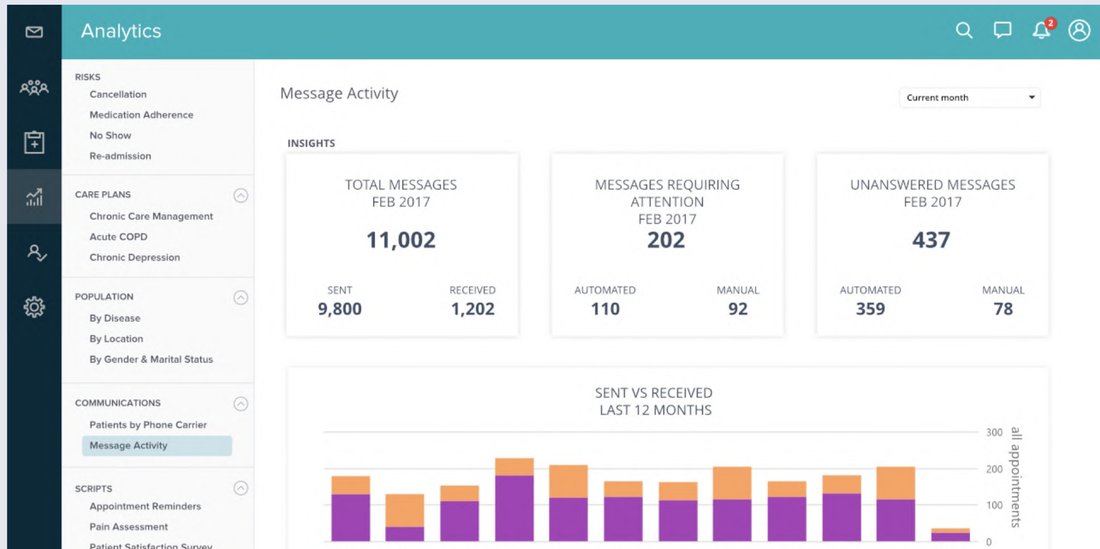
Hospital and program administrators are required by law to keep an audit trail of conversations, so the record of a call is not a feature. It is the obligation.
04 · Results
Three clinics, surveyed
Deployed with three initial clinics with Blue Cross Blue Shield of Louisiana, then surveyed with the clinical workers using it.
8 out of 10
Would you recommend the chronic care management solution.
4.3 out of 5
Does it meet requirements for chronic care management.
4.5 out of 5
How easy is it to use and understand.
05 · What I learned
-
Test with the people who run it
I should have tested with more current users, and specifically with the people who administer the program rather than only the ones who deliver the care.
-
Regulation is a moving target
Research the current law and the proposed changes to it, then look at how the business would adapt. In a reimbursement product the rules are the roadmap.
-
Meet users where they are
A product that assumes a desk, a mouse and quiet does not survive a hallway. The environment is a requirement, not context.
Next case study