Case study 05 · Play & Pause · Personal project
Play & Pause
A pop-up play café for Seattle families. I found the gap, tested whether it was real, and launched it on my own.
01 · The insight
Both needs at once
Parents in Seattle needed somewhere their kids could play freely and they could actually relax. Not one or the other. Both, at the same time, in the same room.
Nothing available solved both sides. Play spaces are built for the kids and treat the adults as supervision. Cafes are built for the adults and treat a toddler as a problem. The gap is a room designed for the fact that the two people arrived together.
02 · Validation
Before writing a single line of code
I wanted to know whether the gap was real to anyone other than me, so I tested demand before building anything.
62
Survey responses
A 62-response survey and a waitlist of 25 families, collected before I wrote any code.
A waitlist is a stronger signal than a survey, because it costs the person something to join. Twenty-five families putting their name down was the point where building stopped being a guess.
03 · What I built
The product and the event
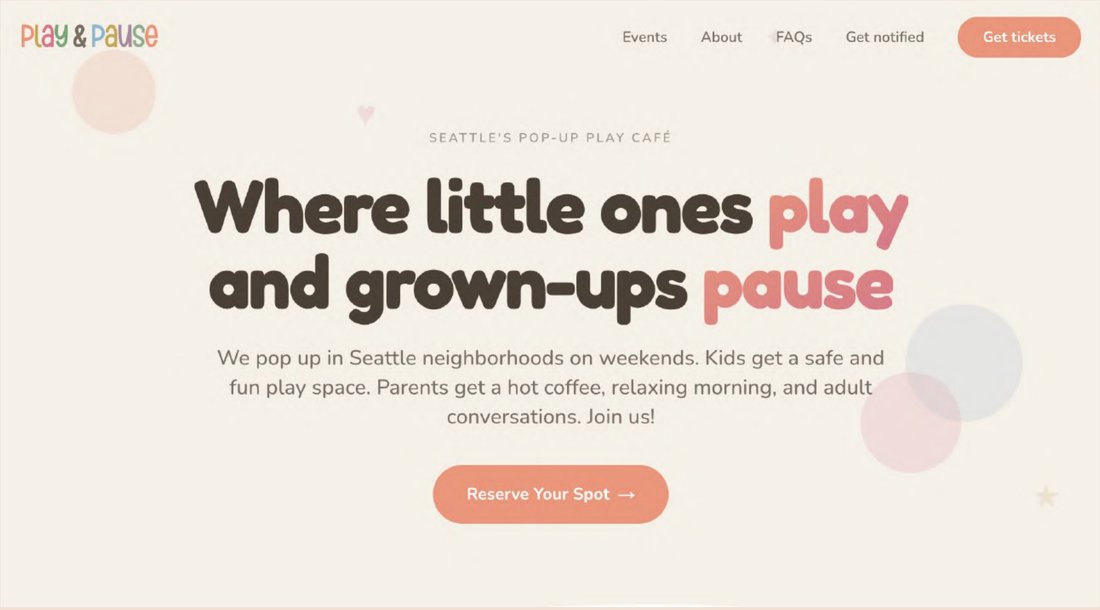
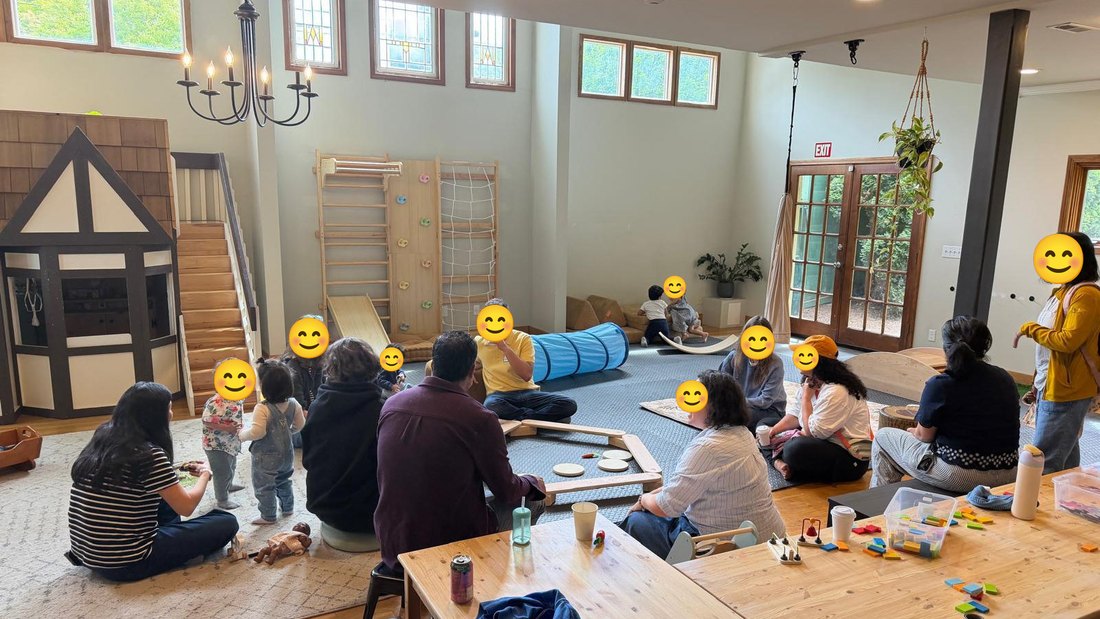
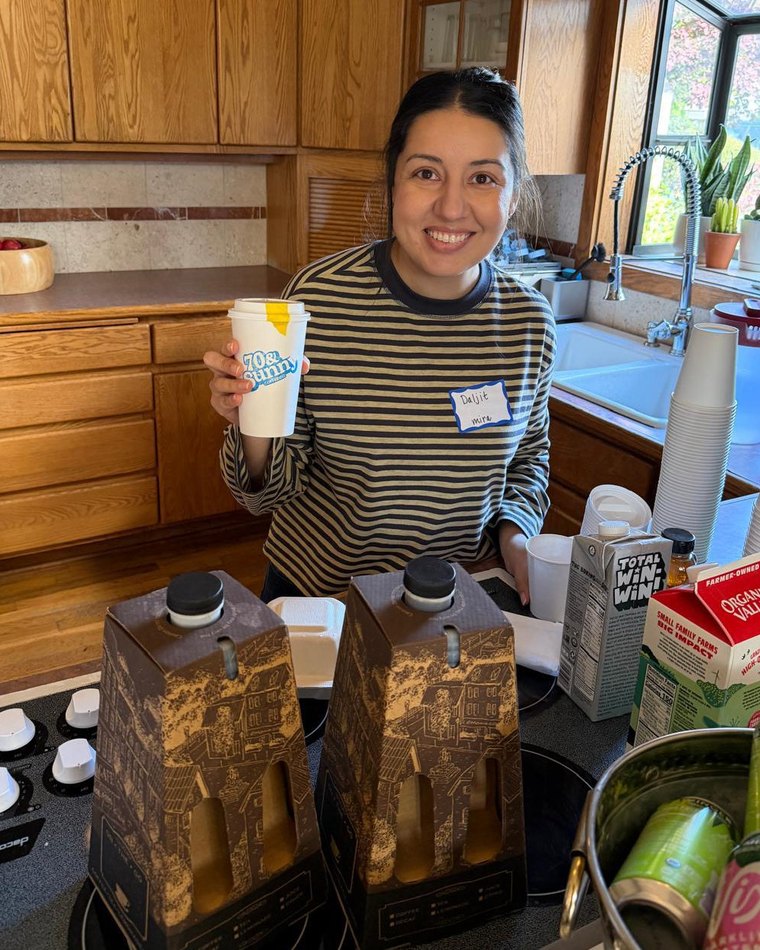
I designed and built the site and the booking flow, then sourced the venue, sorted the insurance and ran the door on the day. Stripe for payments, Supabase for the backend, Claude for the build.
04 · Results
From idea to sold-out event
62
Survey responses before building.
25
Families on the waitlist.
Sold out
First event, in Magnolia.
105
Subscribers after the first event.
05 · Reflections
You do not need a perfect product to launch. You need a booking experience people trust.
What I learned
What I would do differently
I underestimated the insurance requirements for the venue. Next time I would scope liability coverage first and prioritize spaces that already carry their own.
What the validation was worth
A survey and a waitlist were enough to justify building. The thing I was afraid of, spending months on something nobody wanted, was answerable in a couple of weeks for free.
Next case study