Case study 03 · Verizon · Small business tools
Verizon Business Maker – Website Builder Guide
Small business owners were building websites and then not publishing them. The research explained why.
01 · Background
Business Maker
Verizon has 25 million business customers, most of whom buy phone and internet and nothing else. Business Maker was the attempt to sell them software too, and the reason Verizon could plausibly win was not the product. It was bundling, physical stores and a brand that small business owners already trusted with something that mattered.
The suite ran across onboarding, a dashboard, a guide and analytics, covering a business plan, legal, domains, online presence, point of sale, accounting, analytics, ads and LocalWorks. At the time it was used by 100,000 businesses, and revenue had grown from zero to $60 million a year.
02 · The problem
They built the website and never pressed publish
The brief was to create one place where a busy owner who is not technical could start and run their business, integrated with a pile of third party tools. I was the first design hire on the product, which meant the research, the strategy and the process did not exist yet either.
The specific failure was at the end of the website builder. People did the work and then stopped short of publishing, which meant no site, no conversion, and a support call.
User
Understand how to confidently use the tool, which is a technical problem, and how to build a website that actually works for the business, which is not.
Product
A better onboarding experience for the website builder, and a higher publish rate.
Business
More conversions and upsells, fewer support tickets, fewer phone calls to customer support.
03 · Research
Who this is actually for
The picture of the customer came from a survey of 2,000 small business owners and more than 50 user interviews. Three things they told us, in their words rather than ours.
-
Different
No other small business is exactly like mine. Suppliers do not understand what I go through to start up and grow.
-
Business is life
I have poured my heart into this. I live it 24/7 and I cannot leave work behind at the end of the day.
-
Time and cash strapped
Things are complicated and I do not have time or money to waste. I need things fast and simple.
That last one is the constraint that decided the design. Any help we added had to cost the owner less time than doing it wrong would.
04 · The design
Prescriptive, self-directed, or always there
I explored three versions of the guidance, which differ in how much they assume about the person using them.
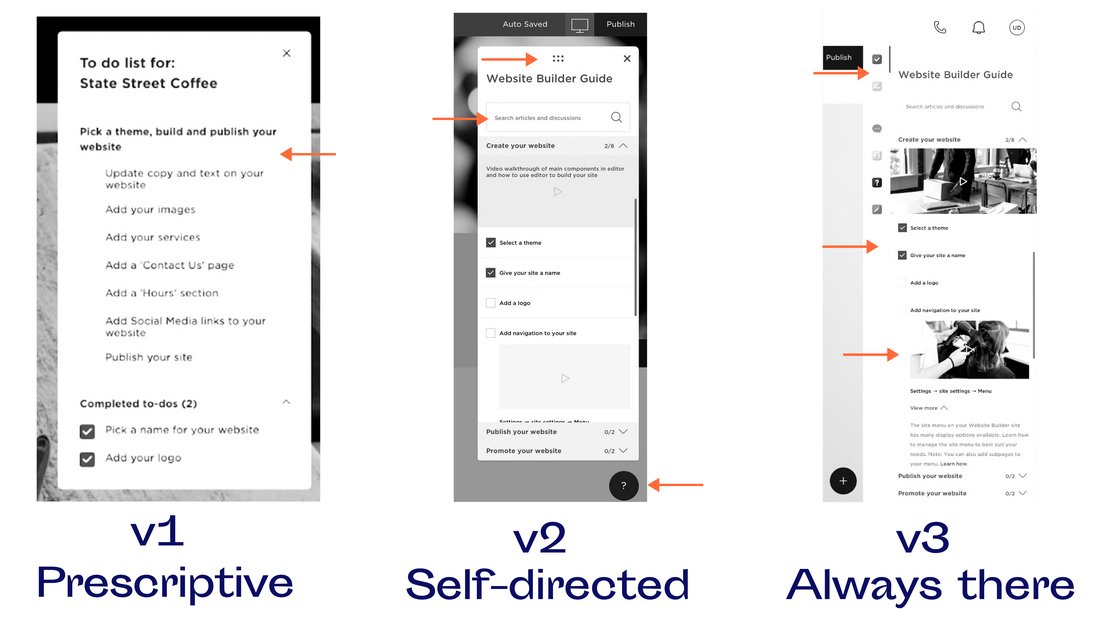
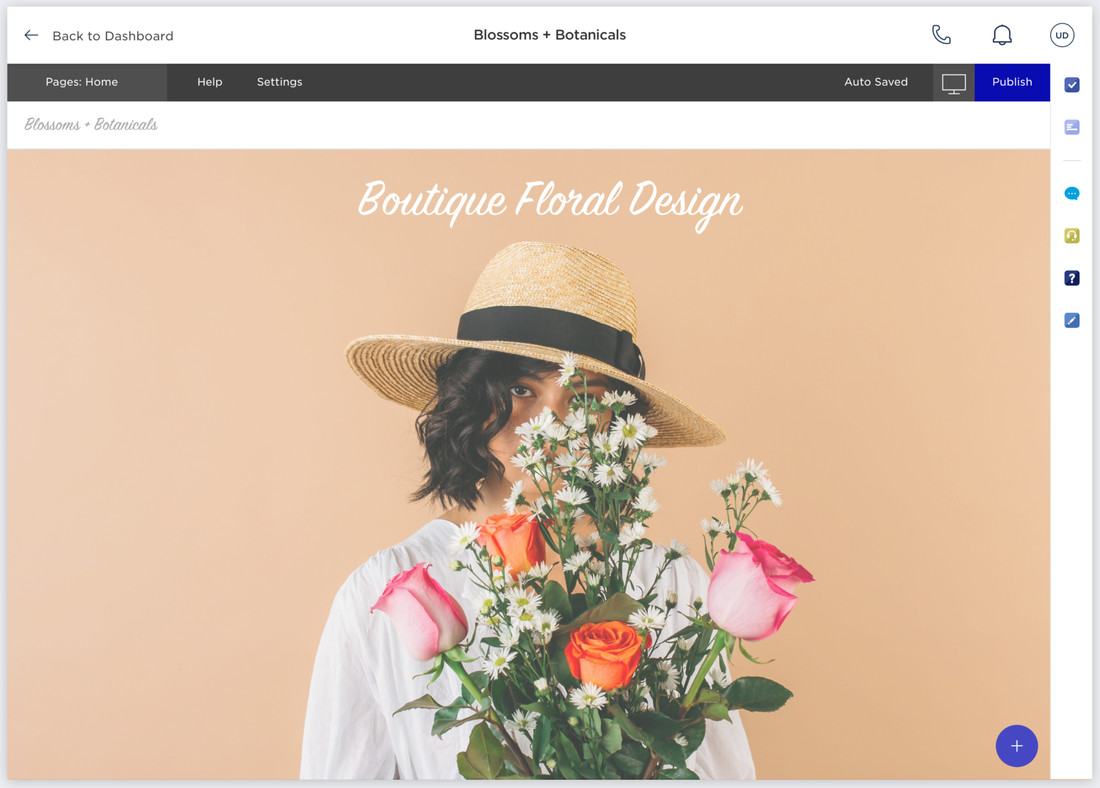
The final build focused on content that was relevant at the moment it appeared, with voice over and guided video rather than written help nobody reads.
05 · Results
Measured two months after launch
Measured two months post-launch with a subset of current and new users.
52%
Decrease in the number of weekly support tickets around this issue.
35%
Increase in conversion rate to the next step, which is the website publish rate.
What was planned next: a personalized widget, expanding the pattern to the other Business Maker tools, and taking it past contextual help into an accelerator course.
Next case study